On the website for the Alaska Department of Fish and Game (hereby referenced as ADF&G), it is stated that their mission is to protect and conserve as many natural habitats and wild species as possible, for the recreation and enjoyment of future generations. After spending so much time working with captive bears in Alaska and seeing firsthand how they execute their policies, I seriously have to wonder if they've even bothered to read their own mission statement. Certainly if you were unfortunate enough to be a bear in these parts, you would no doubt think the same thing, considering that you would be getting the shaft no matter what you tried to do.
Long-time readers no doubt remember my post "Fight For Life" (June 7, 2010) and the controversy that erupted in Sitka over the department's attempt to confiscate and euthanize Seek, the black bear cub, after putting him in our hands. As brutal as that confrontation was, it ultimately served to pave the way to what seemed an alliance between ADF&G and Fortress of the Bear, an alliance that saved the lives of Toby, Baloo, and Lucky last year and, in mid-2011, a grizzly cub named Pandora who now resides at the Montana Grizzly Encounter as Lucy. An incident that took place earlier this summer - one that I was not present for, but that I followed through second-hand info - makes me wonder if that alliance really means anything in the department's eyes.
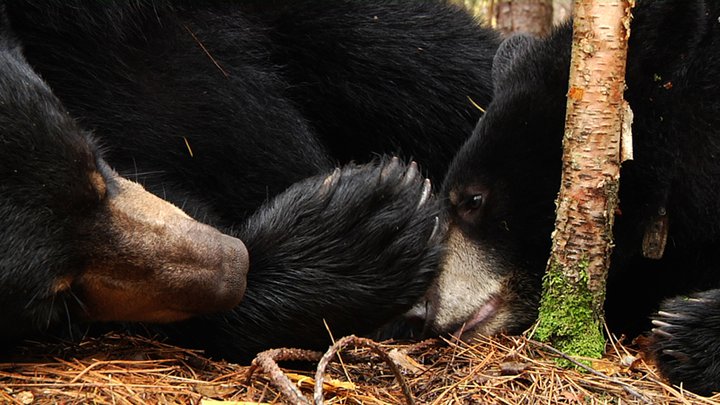
A few months ago, three orphaned brown bear cubs were found on the shores of Bristol Bay on the western coast of the Alaskan Peninsula. As per the new agreement, ADF&G notified Fortress of the Bear of the cubs and, because the Fortress did not have room for them or the funds to construct new holding areas, the department gave them a short window of time in which to find a home for the three young grizzlies. It was tight but a home was located with Mike McIntosh and his Bear With Us sanctuary in Ontario, Canada. Unfortunately Fish and Game requires that potential homes meet an extensive number of specific, and often ludicrous, requirements before cubs will be transferred. That, coupled with the ridiculously short amount of time that the department allows for sanctuaries to meet these requirements, Mike was unable to complete the upgrades and the cubs were destroyed. This prompted quite a backlash against the department, including from Mike himself, about the impossibility of accomplishing such involved demands.
An example of just how ludicrous some of these demands can be. When Les and Evy Kinnear first started the Fortress, Fish and Game officials were sent to inspect the habitats and took issue with steel bolts jutting out one inch from the insides of the abandoned clarifier tanks, fourteen feet above ground. They insisted that the bolts be removed, otherwise the bears would crazily throw themselves against the wall and be impaled. Another official, this one an actual biologist for the department, insisted that the pool areas be drained because bears did not like water and would not go in. Well, I can personally attest to the fact that not only do the bears love the water, they spend eight hours a day in the water!
Even worse, two years ago a starving cub was found right outside the gates of the Fortress. The owners of the facility planned to take the cub in but when someone called to notify Fish and Game, they promptly showed up and shot the cub. The question of why is one that is still asked today and I wish there were some sensible way to answer it. As it stands, it seems that they merely find bullets to be the easiest response, ruling out the hassle of tracking and capturing the animal, the resulting piles of paperwork, and the tedious task of finding a home, a task made all the more tedious by Fish and Game's refusal to put the word out whenever new cubs are acquired. Instead, they wait for zoos and sanctuaries to contact them and ask if orphans are available. Not a very wise-move and not a move that a supposedly conservation-minded organization should approve of, especially considering how much bears contribute to an ecosystem as an umbrella species, but again it is the easiest route requiring the least amount of effort.
Several weeks ago, I heard second-hand that there were three more orphaned cubs somewhere in Alaska and the search was underway to find a home. I have heard no new info on this story since, so I fear that the outcome may have been inevitably grim, not just because of Fish and Game's overly involved requirements but because of the lack of facilities available to take the cubs. There are so few sanctuaries - and even fewer that deal primarily with bears - that facilities with sufficient space are very difficult to find. On top of that, many facilities are either not registered with ADF&G or are unwilling to endure the hundreds of pages of paperwork and requirements in order to get new cubs. Meanwhile, for that very reason, rescue efforts in Alaska are a continuously losing battle. I'm aware of half a dozen cubs that were killed this summer alone because homes could not be found, but I wouldn't be surprised if the numbers were actually much higher. Considering the very large brown bear population on Baranof Island, where Sitka is located, this will no doubt be a recurring theme next summer and in years to come, at least as long as Fish and Game is calling the shots.
If you have a sanctuary or a license to privately own bears, I encourage you to get registered with ADF&G, get the paperwork out of the way, and let's start saving these cubs instead of losing them.
Long-time readers no doubt remember my post "Fight For Life" (June 7, 2010) and the controversy that erupted in Sitka over the department's attempt to confiscate and euthanize Seek, the black bear cub, after putting him in our hands. As brutal as that confrontation was, it ultimately served to pave the way to what seemed an alliance between ADF&G and Fortress of the Bear, an alliance that saved the lives of Toby, Baloo, and Lucky last year and, in mid-2011, a grizzly cub named Pandora who now resides at the Montana Grizzly Encounter as Lucy. An incident that took place earlier this summer - one that I was not present for, but that I followed through second-hand info - makes me wonder if that alliance really means anything in the department's eyes.
A few months ago, three orphaned brown bear cubs were found on the shores of Bristol Bay on the western coast of the Alaskan Peninsula. As per the new agreement, ADF&G notified Fortress of the Bear of the cubs and, because the Fortress did not have room for them or the funds to construct new holding areas, the department gave them a short window of time in which to find a home for the three young grizzlies. It was tight but a home was located with Mike McIntosh and his Bear With Us sanctuary in Ontario, Canada. Unfortunately Fish and Game requires that potential homes meet an extensive number of specific, and often ludicrous, requirements before cubs will be transferred. That, coupled with the ridiculously short amount of time that the department allows for sanctuaries to meet these requirements, Mike was unable to complete the upgrades and the cubs were destroyed. This prompted quite a backlash against the department, including from Mike himself, about the impossibility of accomplishing such involved demands.
An example of just how ludicrous some of these demands can be. When Les and Evy Kinnear first started the Fortress, Fish and Game officials were sent to inspect the habitats and took issue with steel bolts jutting out one inch from the insides of the abandoned clarifier tanks, fourteen feet above ground. They insisted that the bolts be removed, otherwise the bears would crazily throw themselves against the wall and be impaled. Another official, this one an actual biologist for the department, insisted that the pool areas be drained because bears did not like water and would not go in. Well, I can personally attest to the fact that not only do the bears love the water, they spend eight hours a day in the water!
Even worse, two years ago a starving cub was found right outside the gates of the Fortress. The owners of the facility planned to take the cub in but when someone called to notify Fish and Game, they promptly showed up and shot the cub. The question of why is one that is still asked today and I wish there were some sensible way to answer it. As it stands, it seems that they merely find bullets to be the easiest response, ruling out the hassle of tracking and capturing the animal, the resulting piles of paperwork, and the tedious task of finding a home, a task made all the more tedious by Fish and Game's refusal to put the word out whenever new cubs are acquired. Instead, they wait for zoos and sanctuaries to contact them and ask if orphans are available. Not a very wise-move and not a move that a supposedly conservation-minded organization should approve of, especially considering how much bears contribute to an ecosystem as an umbrella species, but again it is the easiest route requiring the least amount of effort.
Several weeks ago, I heard second-hand that there were three more orphaned cubs somewhere in Alaska and the search was underway to find a home. I have heard no new info on this story since, so I fear that the outcome may have been inevitably grim, not just because of Fish and Game's overly involved requirements but because of the lack of facilities available to take the cubs. There are so few sanctuaries - and even fewer that deal primarily with bears - that facilities with sufficient space are very difficult to find. On top of that, many facilities are either not registered with ADF&G or are unwilling to endure the hundreds of pages of paperwork and requirements in order to get new cubs. Meanwhile, for that very reason, rescue efforts in Alaska are a continuously losing battle. I'm aware of half a dozen cubs that were killed this summer alone because homes could not be found, but I wouldn't be surprised if the numbers were actually much higher. Considering the very large brown bear population on Baranof Island, where Sitka is located, this will no doubt be a recurring theme next summer and in years to come, at least as long as Fish and Game is calling the shots.
If you have a sanctuary or a license to privately own bears, I encourage you to get registered with ADF&G, get the paperwork out of the way, and let's start saving these cubs instead of losing them.